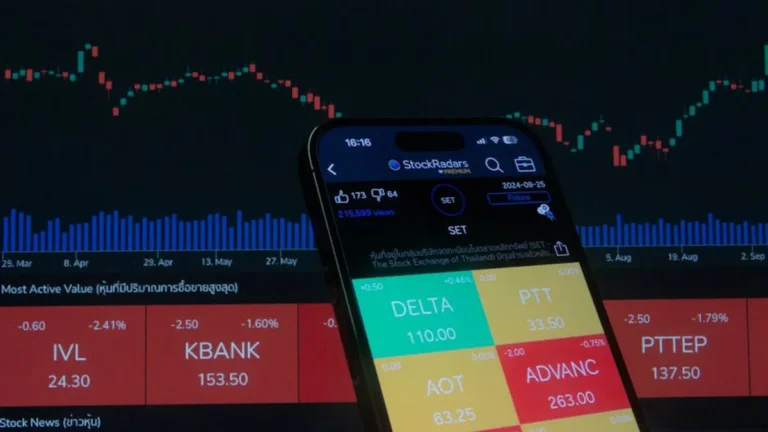
The FTSE, often referenced in financial news, serves as a primary indicator for the UK stock market and broader economic sentiment. For businesses, marketers, and analysts, understanding its composition, operational mechanics, and drivers of movement is essential for contextualizing market performance, identifying economic trends, and informing strategic decisions. It's more than just a number; it reflects the collective health and outlook of some of the largest publicly traded companies in the United Kingdom, impacting everything from investor confidence to consumer spending forecasts.
Defining the FTSE Index Family
The term FTSE (pronounced "footsie") refers to a series of stock market indices, most notably the FTSE 100. These indices are jointly owned by the London Stock Exchange Group and the Financial Times. Their core purpose is to measure the performance of specific segments of the UK equity market, providing benchmarks against which investment portfolios and economic health can be assessed.
The FTSE 100, specifically, tracks the 100 largest UK-listed companies by market capitalization that meet specific eligibility criteria. These companies represent a significant portion of the UK's economic output and often have substantial international operations, making the index a barometer for both domestic and global economic conditions as they pertain to UK-centric businesses.
Operational Mechanics of FTSE Indices
Understanding how FTSE indices are constructed and maintained reveals why they are reliable market indicators. The process involves meticulous selection, weighting, and regular rebalancing.
Constituent Selection and Weighting
Companies are admitted to the FTSE 100 based on their full market capitalization, subject to a "free float" adjustment. Free float refers to the proportion of shares readily available for trading on the open market, excluding those held by insiders or long-term strategic investors. This adjustment ensures the index accurately reflects the tradable market value.
Eligibility also requires a primary listing on the London Stock Exchange and meeting certain nationality requirements, typically based on the company's country of incorporation and operational headquarters. Companies are then weighted within the index according to their free float-adjusted market capitalization. This means larger companies, or those with a higher free float, have a greater impact on the index's overall movement.
Quarterly Rebalancing
The composition of the FTSE 100 is reviewed and rebalanced quarterly, typically in March, June, September, and December. During these reviews, companies that have grown significantly in market capitalization might be promoted into the index, while those that have declined may be relegated to smaller indices, such as the FTSE 250. This process ensures the index remains representative of the largest companies at any given time.
The impact of these rebalances can be significant for the affected companies. Inclusion in the FTSE 100 often leads to increased visibility and demand from index-tracking funds, while exclusion can result in selling pressure.
Index Calculation
The FTSE 100 is a real-time index, meaning its value is continuously calculated and updated throughout the trading day based on the share prices of its constituent companies. The calculation is price-weighted, using a divisor to maintain continuity during corporate actions like stock splits or dividend payments, ensuring that changes in the index value reflect genuine market movements rather than administrative adjustments.
Beyond the FTSE 100: Other Key Indices
While the FTSE 100 garners the most attention, the FTSE Russell family includes several other important indices that provide a more granular view of the UK market:
- FTSE 250: Comprises the next 250 largest UK-listed companies by market capitalization, often seen as a better indicator of the UK's domestic economy due to its constituents' typically greater focus on the UK market compared to the more globally exposed FTSE 100 companies.
- FTSE 350: A combination of the FTSE 100 and FTSE 250, representing the 350 largest companies.
- FTSE All-Share: A much broader index covering approximately 98% of the UK's market capitalization, providing a comprehensive view of the entire UK equity market.
- FTSE SmallCap: Tracks smaller UK-listed companies, offering insights into emerging growth areas.
Drivers of FTSE Movement
The daily fluctuations of the FTSE indices are a result of a complex interplay of factors, both micro and macroeconomic. Understanding these drivers is crucial for interpreting market signals.
Company-Specific Performance: Earnings reports, dividend announcements, mergers and acquisitions, leadership changes, and product launches for individual FTSE constituents directly impact their share prices and, consequently, the index. Given the market capitalization weighting, news from larger companies like Shell, AstraZeneca, or HSBC will have a more pronounced effect.
Economic Indicators: Broader economic data significantly influence market sentiment. Key indicators include:
- Inflation Rates: Higher inflation can lead to increased interest rates, impacting borrowing costs for companies and consumers.
- Interest Rates: Decisions by the Bank of England on interest rates affect corporate profitability and investor returns, particularly for sectors like banking and real estate.
- GDP Growth: Strong economic growth generally correlates with higher corporate profits and market optimism.
- Employment Data: Low unemployment and rising wages can signal economic strength but also potential inflationary pressures.
- Consumer Confidence: Surveys reflecting consumer sentiment can predict future spending patterns.
Geopolitical Events: International political developments, trade disputes, conflicts, and major policy shifts can introduce uncertainty and volatility. As many FTSE 100 companies have global operations, their performance is often tied to the stability of international markets.
Commodity Prices: A significant portion of the FTSE 100 is composed of companies in the energy and mining sectors. Fluctuations in oil, gas, and metal prices directly affect their revenues and profitability, impacting the index.
Currency Fluctuations: The value of the British Pound against other major currencies can affect the profitability of export-oriented companies (a weaker Pound makes exports cheaper and imports more expensive) and the reported earnings of companies with significant overseas operations.
Investor Sentiment: Market psychology, often driven by fear or greed, can lead to short-term movements that may not be fully supported by underlying fundamentals. News headlines, analyst ratings, and general market mood play a role.
Pro Tip: While daily FTSE movements can capture headlines, it is critical for strategic analysis to distinguish between short-term market noise and long-term trends. A single day's dip or surge rarely dictates a sustained economic shift; consistent patterns over weeks or months provide more reliable signals for business planning.
Interpreting FTSE Fluctuations for Business Strategy
For SEO professionals, marketers, and site owners, understanding FTSE movements extends beyond financial trading. It offers valuable context for market analysis, competitive intelligence, and content strategy.
A rising FTSE 100, particularly if driven by broad economic optimism, can signal a more favorable environment for investment, expansion, and consumer spending. Conversely, a declining FTSE might suggest economic headwinds, prompting businesses to adopt more cautious strategies, such as optimizing operational efficiency or focusing on resilient product lines. For content creators in the finance niche, FTSE movements provide timely topics for analysis, commentary, and educational resources, directly impacting search interest and engagement.
Monitoring the performance of specific sectors within the FTSE can also inform business decisions. For example, if pharmaceutical companies are consistently outperforming, it might indicate increased investor confidence in healthcare innovation, potentially influencing content strategies or partnership opportunities for health-related businesses. Similarly, sustained underperformance in a sector could signal market saturation or regulatory challenges, warranting a review of competitive landscapes or market entry feasibility.
Frequently Asked Questions
What does FTSE stand for?
FTSE is an acronym derived from the Financial Times and the London Stock Exchange, the two entities that jointly own the index series.
How often is the FTSE 100 rebalanced?
The FTSE 100 undergoes a quarterly review and rebalancing process, typically occurring in March, June, September, and December, to ensure its constituents remain the 100 largest eligible companies.
Is the FTSE 100 a good indicator of the UK economy?
The FTSE 100 is a significant indicator, but with caveats. Many of its constituent companies are large multinationals with substantial overseas earnings, meaning its performance can reflect global economic conditions as much as, or more than, purely domestic UK economic health. The FTSE 250 is often considered a more accurate barometer for the domestic UK economy.
Who owns the FTSE indices?
The FTSE indices are jointly owned and managed by the London Stock Exchange Group and the Financial Times, through their subsidiary FTSE Russell.